
MONARCH MEMORY(H.K.)CO.,LIMITED
HOTLINE
8618770187778
At present, there are three main types of MEMS processing technology: bulk silicon micromachining technology, surface micromachining process and non-silicon process.
Bulk silicon micromachining process processes silicon substrates through double-sided lithography, corrosion and bonding to form a three-dimensional microstructure. In the bulk silicon micromachining process, due to the need for a double-sided lithography machine, it is necessary to produce patterns with precise position requirements on the front and back sides of the silicon wafer. It is often used for silicon wafers of tens or hundreds of microns to make large aspect ratios. Deep silicon etching is the core of bulk silicon micromachining technology, which takes advantage of the etchant's dependence on silicon, that is, it has different corrosion rates on different crystal planes, thereby etching grooves with high aspect ratios.
Surface micromachining process forms various surface microstructures by forming a sacrificial layer on the surface of the silicon wafer and corroding it. Because the microfabrication process is carried out on the sacrificial layer on the film that corrodes the surface of the silicon wafer, it is also called sacrificial layer corrosion technology. Surface sacrificial layer technology is the core process of surface micromechanical technology, the key to which lies in the selection of sacrificial layer and corrosion liquid materials, which requires the corrosion liquid to corrode the sacrificial layer while almost not corroding the upper structural layer and the lower substrate. Due to the high precision control requirements, by precisely controlling the film thickness, a structural pattern of a few microns can be formed.
The non-silicon process uses lithography, electroforming and injection molding processes to form microstructures with large aspect ratios (up to 200), also known as LIGA (i.e. German Lithographie (lithography), Galanoformung (electroforming) and Abformung (injection molding)). Since it is necessary to create micro-devices with large depths, it is necessary to irradiate X-rays with strong penetrating power. Due to the high cost of X-ray deep lithography and the inability to carry out mass production, the current industrialization of LIGA technology needs to be realized through electroforming molding.
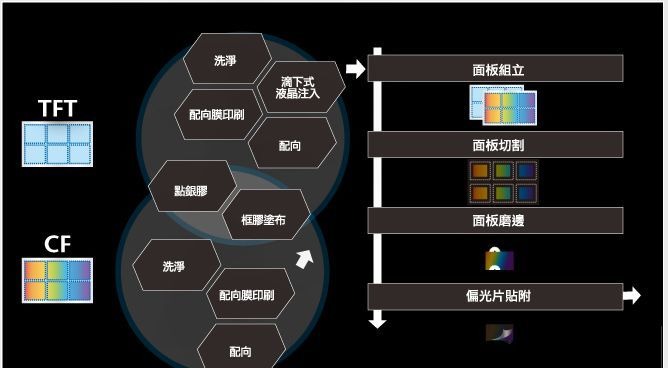
TFT-LCD is a technology that cleverly combines microelectronic technology with liquid crystal display technology. The microelectronic fine processing technology on silicon base is transplanted onto a large area of glass, and the array substrate is paired with a substrate with a color filter film, and finally a polarizer is applied to form a display device. The manufacturing process of TFT-LCD includes the following 4 parts: (1) forming a TFT array on a glass substrate; (2) form a color filter pattern on the color filter substrate; (3) Substrate to box; (4) Install peripheral circuits and assemble backlights. Among them, the most commonly used TFT array substrate is amorphous silicon TFT, which mainly uses metal and non-metallic film processes to form the required wiring pattern after mask exposure, development, dry etching and peeling steps.
Among the three MEMS processing processes, the bulk silicon micromachining process requires a double-sided lithography machine and bonding technology, etc., and the LIGA process requires an X-ray exposure machine, so it is not compatible with the TFT-LCD process. The surface micromachining process is simple and easy to be compatible with TFT-LCD process, so it is widely used. The MEMS-assisted display processes introduced in this paper are based on surface micromachining technology.